
NFL · Film Room
The game before the snap.
A practical way to watch formation, motion and defensive response before the ball moves.
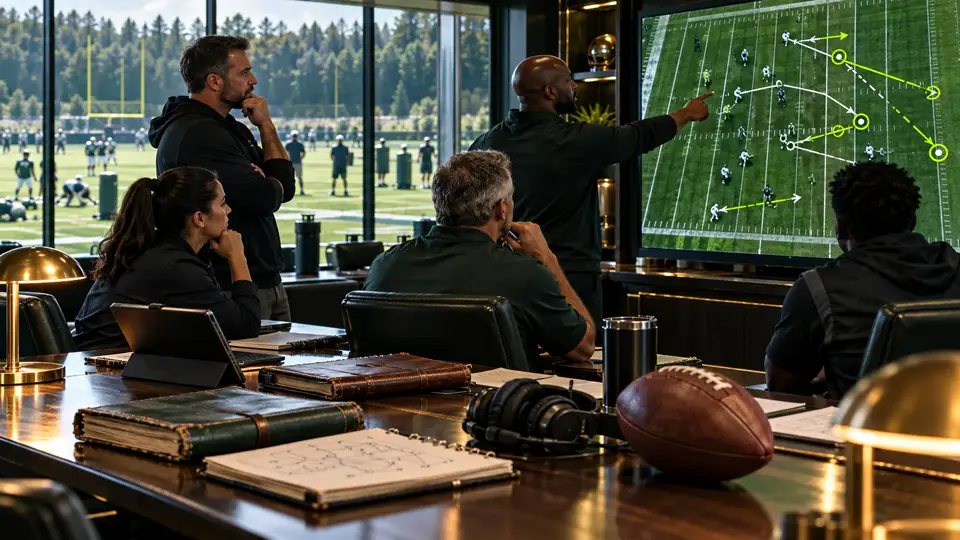
A useful football viewing habit begins before the snap. Find the personnel, count the receivers on each side and identify the backfield alignment. You do not need to name every play to notice how an offense presents its options.
Next, watch movement. A player crossing the formation may force a defense to communicate or change its spacing. Record the response rather than declaring the coverage from one clue. A defender following motion is information, but it does not prove every player’s assignment.
After the snap, compare the first two seconds with your expectation. Did the blockers move together? Did a receiver settle into space or continue across it? Where did the quarterback look first? Television angles leave parts of the field outside the frame, so a missing defender is not evidence of an uncovered player.
Build a small notebook around repeated situations: short yardage, third-and-long, the red zone and the two-minute phase. Compare several examples before describing a tendency. One successful play is an example, not a complete account of an offense.
Finally, separate observation from inference. “The safety moved toward the line” is visible. “The quarterback changed the play because of it” usually needs additional evidence. That distinction makes your film notes more useful and keeps a good question from turning into an unsupported certainty.
Field notes
- Personnel, formation, motion, response.
- Compare several examples of the same situation.
- Mark what the camera does not show.