
MLB · Black Sports History
Jackie Robinson: beyond the first day.
A famous date matters. So do the career, the institutions and the people around it.
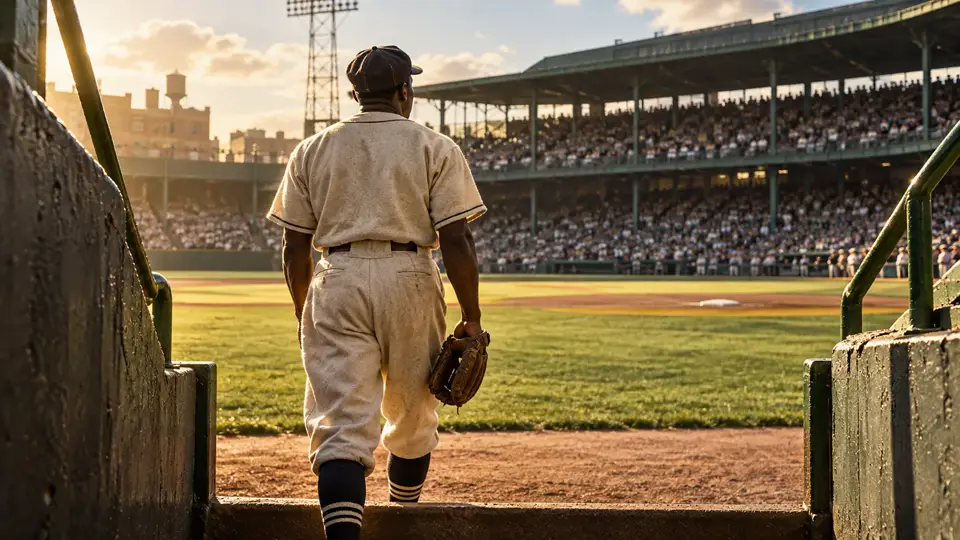
On April 15, 1947, Jackie Robinson made his Brooklyn Dodgers debut at Ebbets Field. The National Baseball Hall of Fame preserves a reporter’s scorebook from that day. It offers a useful starting point: a historic event was also a working baseball game, observed pitch by pitch and recorded by people who were there.
The significance reaches beyond a first appearance. Robinson challenged the color barrier in modern Major League Baseball while doing the daily work demanded of a major-league player. Remembering only a ceremonial date risks overlooking the sustained pressure of competing inside an institution that had excluded Black players.
It is also important to distinguish that barrier from the history of baseball itself. Black baseball talent, professional teams and communities did not begin in 1947. The Negro Leagues and their players belong in the wider story, rather than serving only as a preface to integration.
The Hall of Fame’s account places Robinson’s Dodgers career between 1947 and 1956. That span invites a deeper reading than a single symbolic moment: how he played, how the club changed, and how the coverage around him recorded or failed to record the experience.
Start with an original object, then compare a museum’s explanation with a player biography and the broader history of Black baseball. Keep dates, interpretations and quotations separate in your notes. A sports-history story becomes richer when the source remains visible.
Field notes
- Begin with the April 15, 1947 scorebook account.
- Place integration alongside Negro Leagues history.
- Study the career beyond the commemorative date.